Heart Olympics

Results

Stories

APEX 2026

Date14 July - 30 JULY
CAVITYTHORACIC
Athletes35
Events24

Overview

If our organs were human beings, the heart would be our symbol in the great competition of life. The brain? Probably a government worker—loves rules and order. The lungs? Environmental workers, all about clean air and balance. The liver and kidneys? Definitely lawyers, managing all the toxic messes we get ourselves into. But the heart? The heart would be our Olympian. The athlete who embodies strength, resilience, and the spirit of unity, the one we’d send to represent us in the greatest games of all, and that Olympic games, too, would be one of the strangest, the most exciting, and intriguing events in the world of the Hearts. 

The Heart Olympics is a way of seeing the diversity of hearts across the living world. From the smallest shrew to the largest whale, every heart is built for a different challenge — speed, strength, endurance, rhythm, or survival in extreme environments.No single heart is the best at everything.
Each heart is perfect for the life it was made to sustain.Through these games, we discover that the human heart is not the strongest or the fastest — but it is one part of a vast and remarkable family of hearts that keep life moving on Earth.

News:

In a stunning display of versatility and composure, the Human Heart has officially led the Heart Olympics in total medal count, proving that adaptability may be the greatest athletic skill of all.
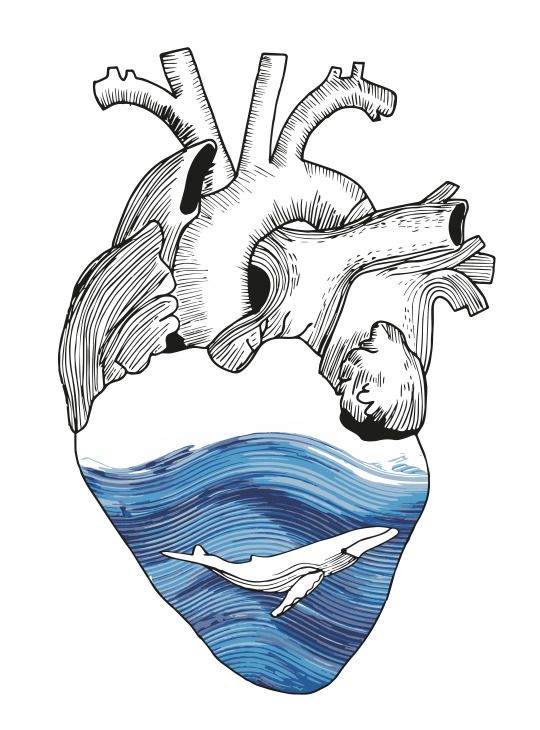
APEX Arena — Endurance FinalsIn what commentators are calling “the most dominant long-form performance in Olympic history,” the Blue Whale’s Heart has officially set a new lifetime pumping record — an estimated hundreds of billions of liters over a lifetime.

Larynx Royale Steals the Closing Ceremony with “We Are the World” by Micheal Jackson Performance

LEGEND ANNOUNCES RETIREMENT: The Tortoise Heart Bids Farewell After a Century of Competition
APEX Stadium — Final Night

The crowd’s reaction? Divided.
Some cheered the logic. Others booed the interference.
Because in the Heart Olympics, one question has quietly lingered:
Who truly leads?
The Brain — or the Heart?

APEX
2026

SPORTS/RESULTS

APEX
2026

Medal Table

Class

Flag

Gold

Silver

Bronze

Total

Mammals

11

14

15

40

Birds

4

2

4

10

Invertebrates

3

4

2

9

Fish

3

2

5

Reptiles

2

1

3

6

Amphibians

1

1

2

Privacy Preference Center

When you visit our Digital Platforms, we may store or retrieve information on your browser, mostly in the form of cookies and similar tracking technologies (“cookies”). We may place our own cookies (first party cookies) or allow our partners and service providers to place their own cookies (third party cookies) and collect information. This information might be about you, your preferences or your device and is mostly used to measure website usage and traffic, analyse our Digital Platforms’ performance, create a profile about you, personalise your experience and the content offered to you, carry out certain marketing and advertising activities, which includes tailoring marketing to your interests, as well as to measure ads performance. The cookies and the information collected by them are also used to make the Digital Platforms work. Because we respect your right to privacy, you can choose not to allow some categories of cookies. Click on the different category headings to find out more. Please note that blocking some types of cookies may impact your experience of the Digital Platforms and the services we are able to offer. For more information, please read our Cookies Policy
Cookie Policy

Manage Consent Preferences

Strictly Necessary Cookies

Always Active

Strictly Necessary cookies that enable you to navigate our Digital Platforms and enable us to provide an optimised service. These cookies are necessary for the Digital Platforms to function and cannot be switched off in our systems. They are usually set in response to actions made by you which amount to a request for services, such as setting your privacy preferences, logging in or filling in forms, or they are set so that we may review the performance of our Digital Platforms. You can set your browser to block or alert you about these cookies, but some parts of the Digital Platforms will not then work.

Performance and Analytics Cookies

Cookies that improve the performance of our Service and provide you with a better user experience. These Cookies allow us to count visits and traffic sources so we can measure and improve the performance of our Service. They help us to know which pages are the most and least popular and see how visitors move around the Service. If you do not allow these cookies we will not know when you have used our Service.

Functional Cookies

Functional cookies that enhance the functionality and personalisation of our Service by storing your preferences. If you do not allow these Cookies, then some or all of the services available may not function properly.

Marketing and Advertising Cookies

Marketing and Advertising cookies that enable the tailoring of online advertising based on your browsing activity and the location from which you access our Digital Platforms. These cookies include cookies set by our advertising partners. The cookies are used (i) by us to measure traffic to our Digital Platforms and for the purpose of personalising services and offering you the most relevant content, and (ii) by us and by our partners to build a profile and to show you and other people relevant adverts and content both on our Digital Platforms as well as on other sites. If you do not allow these cookies, you will continue to see online advertising and content, but that advertising and content will be less tailored to you.

Vendors List

  • label
ConsentLeg.Interest
label
label
label

    Studying the human heart is enough. But the human heart is only one solution among many. Reptiles, whales, lungfish — each heart reflects the life it supports. What is normal in one species may be pathological in another. For centuries, scientists have understood our bodies by studying others. Cross-species research does not rank hearts — it reveals design.Mammals led many Olympic events because their four-chambered hearts support complex, energy-demanding lives. But complexity is not superiority. It is specialization.The whale masters endurance.
    The shrew masters speed.
    The axolotl masters regeneration.
    The tortoise masters time. To understand our own heart fully, we must look beyond it. Because evolution has been running this Olympic Games for millions of years —
    and the human heart is just one remarkable competitor.